Forex Trading for Beginners
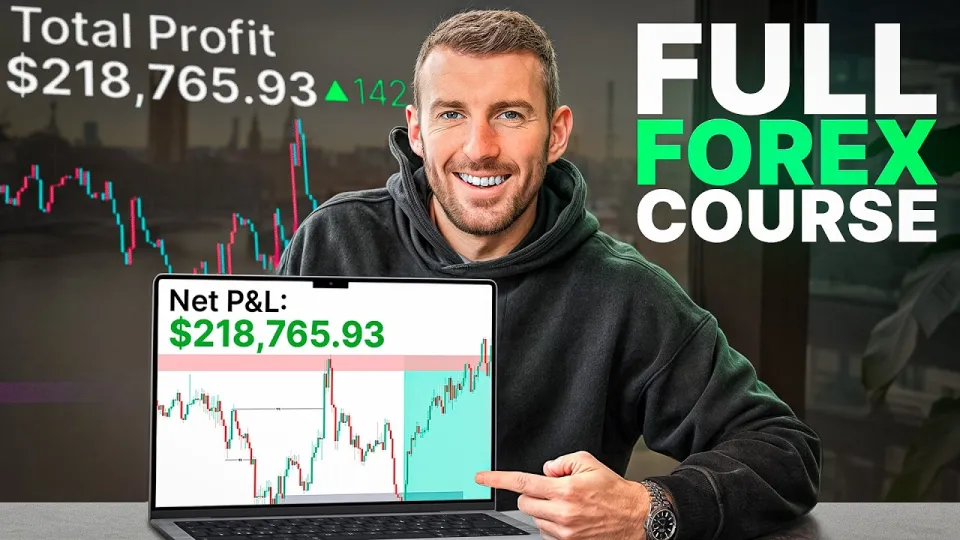
Video: Beginners Guide To Forex Trading In 2026 (+3 hours)
You can order the same kind of articles for your own video to boost it on YouTube and Google. Just message the Telegram bot @sat_sit_bot. It writes articles around your video, embeds the video and publishes them on popular niche websites (no ads). Your first 50 articles are free.
· based on the channel Matt Donlevey - Photon Trading
Forex trading is the buying and selling of currencies on the foreign exchange market, where the value of one currency is quoted against another. It is the largest and most liquid financial market in the world, with a daily trading volume exceeding $7 trillion. For beginners, forex offers opportunities but also significant risks, so a solid understanding of market mechanics and disciplined risk management is essential. To get started with a structured approach, you can access a free Photon Trading course and cheatsheets here: Free Photon Trading Course + Cheatsheets.
What Is Forex Trading and How Does It Work?
Forex trading involves speculating on the price movement of currency pairs, such as EUR/USD or GBP/JPY. Unlike stock exchanges, forex is decentralized and trades over-the-counter (OTC) through a network of banks, brokers, and electronic platforms. The market operates 24 hours a day, five days a week, across major financial centers like London, New York, Tokyo, and Sydney. Prices are driven by supply and demand, influenced by economic data, interest rates, geopolitical events, and market sentiment. Retail traders access the market via brokers, who provide leverage and execute trades. Understanding the bid-ask spread, order book, and auction market theory is fundamental to grasping how prices move. In the video guide by Matt Donlevey - Photon Trading, these concepts are broken down in detail, emphasizing that technical analysis alone is insufficient without understanding market dynamics.
How Much Money Can You Make Trading Forex?
The potential earnings in forex trading are highly variable and depend on capital, strategy, risk management, and market conditions. There is no fixed salary; profits come from correctly predicting price movements. Leverage allows traders to control larger positions with relatively small capital, but it also amplifies losses. Many beginners are attracted by the possibility of high returns, but realistic expectations are crucial. Professional traders often aim for consistent monthly returns of 2-5%, but achieving this requires skill and discipline. It's important to note that a significant portion of retail traders lose money. The video discusses how to trade other people's money (prop firm funding) as a way to scale without risking personal capital, but this also comes with strict rules and profit targets. Ultimately, forex trading is not a get-rich-quick scheme; it demands continuous learning and adaptation.
How to Develop a Trading Strategy Based on Market Dynamics
A robust trading strategy should be built on the true underlying market dynamics, not just geometric patterns. The Photon Strategy, introduced in the video, focuses on market structure, liquidity concepts, and order flow. Here are key steps to develop such a strategy:
- Understand Market Structure: Identify swing highs and lows to determine trend direction. The video covers three types of structure: bullish, bearish, and ranging.
- Analyze Multi-Timeframe: Use higher timeframes (e.g., daily, 4-hour) to establish context and lower timeframes (e.g., 15-minute, 5-minute) for entry timing.
- Identify Premium and Discount Zones: Determine whether the price is in a premium (overvalued) or discount (undervalued) area relative to the recent range. This helps in finding favorable entry points.
- Spot Supply and Demand Zones: Locate areas where institutional buying or selling interest is likely, based on past price reactions.
- Incorporate Liquidity Concepts: Understand where stop-losses and pending orders cluster, as price often moves to capture liquidity before reversing.
- Define Entry and Exit Rules: Use order flow and candlestick patterns to time entries. Set clear stop-loss and take-profit levels based on market structure.
- Backtest and Refine: Test the strategy on historical data to validate its edge and adjust parameters.
The video emphasizes that a strategy must be mechanical and systematic to remove emotional decision-making. It also highlights the importance of trade management, including trailing stops and partial profit-taking.
Risk Management and Money Management Rules
Effective risk management is the cornerstone of long-term success in forex trading. The video outlines several key rules:
- Risk Per Trade: Limit risk to 1-2% of your account balance per trade. This ensures that a series of losses does not wipe out your capital.
- Position Sizing: Calculate lot size based on the distance to your stop-loss and the risk amount. Never risk more than you can afford to lose.
- Diversification: Avoid overexposure to a single currency pair or correlated pairs.
- Use Stop-Loss Orders: Always set a stop-loss to cap potential losses. Mental stops are discouraged.
- Risk-Reward Ratio: Aim for a minimum of 1:2 risk-reward ratio to ensure profitability even with a moderate win rate.
- Money Management: The video also discusses compounding and scaling strategies, as well as how to manage drawdowns.
Additionally, trading psychology is addressed: mastering the strategy first, then focusing on the psychological aspects, as many traders fail due to emotional indiscipline.
Common Mistakes and How to Avoid Them
The video identifies three common mistakes made by beginners:
- Overleveraging: Using excessive leverage can lead to rapid losses. Stick to conservative leverage and proper position sizing.
- Lack of a Trading Plan: Trading without a clear plan leads to impulsive decisions. Create a written trade plan that includes entry/exit criteria, risk management, and journaling.
- Ignoring Trading Psychology: Fear and greed can sabotage even the best strategy. Develop discipline through journaling and reviewing trades.
To avoid these mistakes, the video recommends backtesting, keeping a trade journal, and continuously educating yourself. It also stresses the importance of choosing a reliable broker with low spreads and fast execution.
How to Execute a Trade and Journal Your Progress
Executing a trade involves several steps: analyzing the market, identifying a setup, calculating position size, placing the order with stop-loss and take-profit, and managing the trade until closure. The video provides a walkthrough of how to execute a trade on a trading platform. After each trade, journaling is crucial: record the rationale, emotions, and outcome. This helps in identifying patterns and improving over time. The video also covers how to choose a broker, considering factors like regulation, spreads, commissions, and platform reliability. Trading costs, such as spreads and swaps, should be factored into your strategy.
Useful Resources
- Free Photon Trading Course + Cheatsheets
- Photon Mentorship Program
- Free Telegram Channel
- Instagram: @photontrading
Final Thoughts
Forex trading is a challenging but potentially rewarding endeavor that requires a deep understanding of market dynamics, a systematic strategy, and strict risk management. The comprehensive guide by Matt Donlevey - Photon Trading offers a free, in-depth course that covers everything from market microstructure to trading psychology, making it an excellent resource for beginners. By following a structured approach and avoiding common pitfalls, you can increase your chances of success. Remember to start with a demo account, backtest your strategy, and gradually build confidence. For those serious about advancing, consider exploring the free course and other resources provided by Photon Trading.
Key takeaways
- Forex is the world's largest financial market with daily volume exceeding $7 trillion.
- Retail traders typically use leverage, which magnifies both profits and losses.
- A trading strategy should be based on market microstructure and order flow, not just geometric patterns.
- Risk management rules, such as risking 1-2% per trade, are crucial for long-term survival.
- Backtesting and journaling help refine a trading plan and build consistency.
Questions & answers
How much capital do I need to start forex trading?
You can start with as little as $100 with a micro account, but it's recommended to have at least $1,000-$5,000 to properly manage risk. Leverage allows smaller capital, but higher capital provides more flexibility and resilience.
Is forex trading profitable for beginners?
Profitability depends on skill, discipline, and risk management. Most beginners lose money initially, so it's crucial to educate yourself, practice on a demo account, and trade with strict rules. Consistent profits require time and experience.
What is the best strategy for forex trading?
There is no one-size-fits-all strategy. A good strategy is based on market structure, liquidity, and order flow, and is backtested and refined. The Photon Strategy emphasizes understanding market dynamics and mechanical rules.
How long does it take to learn forex trading?
It takes several months to years to become consistently profitable. Mastery requires studying market theory, practicing on a demo account, backtesting, and journaling. Many traders spend 1-2 years before seeing reliable results.
Source: Beginners Guide To Forex Trading In 2026 (+3 hours) · Markdown version