Bitcoin Faces a Make or Break Weekly Close
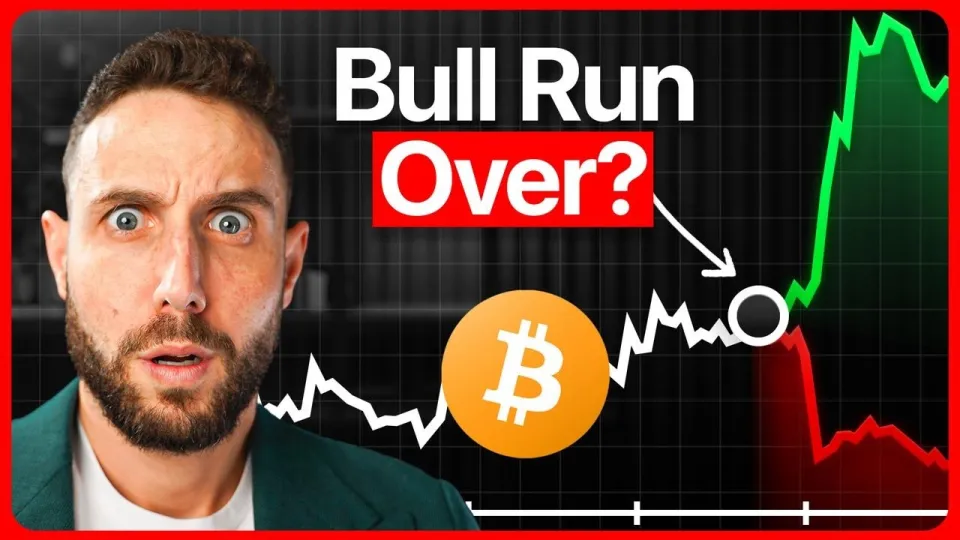
Video: Bitcoin Has 2 DAYS to Save the Crypto Bull Run
You can order the same kind of articles for your own video to boost it on YouTube and Google. Just message the Telegram bot @sat_sit_bot. It writes articles around your video, embeds the video and publishes them on popular niche websites (no ads). Your first 50 articles are free.
· based on the channel EllioTrades
Bitcoin's next move hinges on a single weekly candle: if BTC holds its support zone into the weekly close, the bull run stays intact and altcoins become buyable; a close below it opens the door to a deeper retracement. That is the framing of the latest breakdown from EllioTrades, which lays out a concrete trading plan for BTC and the coins worth watching if support holds. Traders who want to position around the outcome can use the Kalshi market linked by the channel to trade the scenario rather than guess at it.
The setup matters because weekly closes, not intraday wicks, are what most swing traders use to define whether a trend is still valid. A single red daily candle is noise; a weekly close under a level that has held for weeks is a structural signal that forces systematic sellers and trend followers to cut exposure.
Why the weekly close decides the Bitcoin bull run
A weekly close is the market's final verdict on a seven-day auction, and it is the reference point that most institutional and semi-professional desks use for risk limits. When Bitcoin closes a week below a support band that has repeatedly produced bounces, the probability of a deeper correction rises sharply, because the traders who bought that support are now underwater and become sellers on the first bounce.
The reverse is equally powerful. If BTC wicks below support during the week but reclaims it by the close, the move is read as a liquidity sweep: stops were taken, weak hands were flushed, and the trend resumes with a cleaner holder base. That is why the plan is binary rather than directional — the same candle that invalidates the bull case in one scenario confirms it in the other.
The BTC levels and the two scenarios
The plan is built around a defined support zone rather than a single tick, and the response depends on how the weekly candle resolves:
- Support holds and the week closes above the zone: bias stays bullish, dips are for adding, and the prior range highs come back into play as the next target.
- Support breaks and the week closes below it: the bias flips to defensive, lower levels become the reference, and new long entries are postponed until the market prints a higher low.
- A wick below support followed by a reclaim: treated as a sweep, not a breakdown, and often the highest-conviction long setup of the sequence.
In practice this means pre-defining invalidation before the close, not after it. Position size should be set so that a stop below the support band costs a fixed, acceptable percentage of the account — because the difference between a wick and a close can be several percent of price in minutes.
What happens to altcoins if Bitcoin holds
The altcoin plan is conditional: altcoins are only worth buying if BTC support holds, because in a Bitcoin breakdown alts typically fall two to three times harder. The sequence matters more than the coin list.
First, Bitcoin stabilises and volatility compresses. Second, ETH/BTC stops making lower highs. Third, capital rotates into large caps and then into higher-beta names. Buying altcoins before step one is complete is how traders end up catching a falling knife with borrowed conviction.
If support holds, the practical approach is to build a watchlist in advance and stage entries: a starter position on confirmation, adds on a retest, and a hard invalidation if BTC loses the weekly level. That structure keeps a single Bitcoin candle from turning a good altcoin thesis into an unmanaged loss.
The bearish counterarguments traders are weighing
Not everyone accepts the bullish framing, and the scepticism is worth taking seriously. The most common objections fall into four buckets:
- Market makers are off on weekends. If the decisive move happens on a thin weekend order book, the argument goes, retail flow cannot defend a level and the close is effectively decided by low-liquidity noise.
- Bitcoin dominance keeps rising. A rotation into BTC at the expense of altcoins would mean lower lows for most alts even if BTC itself holds.
- A short bear market implies a weak bull. If the correction is shallow and brief, the next expansion may lack the fuel of a full capitulation and reset.
- Macro and index risk. One catalyst raised in the discussion is the MSCI review of digital asset treasury companies such as MSTR, which could force index-related selling if those firms are removed from global benchmarks.
Each of these is a scenario, not a certainty, but together they argue for defined risk rather than all-in conviction on either side.
The debate over wanting a cheaper entry
The sharpest pushback in the comments was aimed at the idea of hoping for a major setback to buy crypto cheaper. The argument: it would be far better to be forced to dollar-cost average higher, because rising prices confirm the bull market and raise the probability of even larger gains, while invalidating the bull case lowers those probabilities.
There is real logic on both sides. Buying a discount improves the entry price, but it only pays if the trend survives; a breakdown deep enough to offer a great entry also raises the odds that the cycle has already topped. For most portfolios the resolution is mechanical: keep a core position that does not depend on catching the low, and reserve a smaller cash sleeve for the discount scenario. That way a continued bull run is not missed, and a deep flush is an opportunity rather than a rescue operation.
Tools and links from the breakdown
- Kalshi market access via the channel's link — event contracts for trading the outcome of the weekly close.
- Liquid trading with a 10% fee discount — the exchange referenced for execution.
- WEEX deposit bonus — deposit $100 to unlock up to $4,000 in bonuses.
- fomo trading journal — the channel's public trading journey.
- EllioTrades on X — updates between videos.
Conclusion
Bitcoin's weekly close is the pivot: hold support and the bull run stays alive with altcoins following, lose it and the market shifts to a lower range with defensive positioning. The plan is less about prediction than about pre-committing to a response for each outcome, with invalidation defined before the candle prints. EllioTrades frames the decision as a deadline rather than a forecast, and the practical takeaway is to size positions so that either scenario is survivable. If you want to trade the resolution of that weekly close instead of watching it, the Kalshi link from the video is the place to start.
Key takeaways
- Bitcoin's weekly close is framed as the deciding factor for whether the crypto bull run continues or the market rolls over into a deeper correction.
- The trading plan is built around holding support on the weekly candle; a close below it shifts the bias toward lower targets and a defensive stance.
- Altcoins are treated as a second step: they are only worth buying if BTC support holds, not before.
- Viewers pushed back on the idea of wishing for a cheaper entry, arguing that having to DCA higher would confirm the bull case instead.
- A separate catalyst flagged in the discussion is the MSCI decision on digital asset treasury companies such as MSTR.
Questions & answers
What does a weekly close below Bitcoin support actually change?
It flips the structural bias from buy-the-dip to defensive. A close below a band that has repeatedly held means the traders who bought that support are underwater, and they tend to sell into the first bounce. Most trend-following systems also reduce exposure on a weekly close, which adds supply.
Should I buy altcoins before Bitcoin confirms support?
Generally no. Altcoins typically fall harder than BTC when Bitcoin breaks down, so the sequence should be BTC stabilisation, then ETH/BTC strength, then rotation into large caps and higher-beta names. Buying alts first means taking maximum risk at the moment of least confirmation.
Is it better to wait for a cheaper Bitcoin entry or buy higher?
It depends on the size of your cash sleeve. A core position that does not depend on catching the low protects you if the bull run continues, while a smaller reserve lets you buy a deep flush. Waiting entirely for a discount risks missing the move if the trend simply resumes.
What other catalysts could override the technical setup?
Macro and index decisions can dominate a single candle. One example discussed is the MSCI review of digital asset treasury companies such as MSTR, which could trigger index-related selling if those firms are removed from global benchmarks. Thin weekend liquidity is another factor that can distort a close.
Source: Bitcoin Has 2 DAYS to Save the Crypto Bull Run · Markdown version